Same Street. Different Score. Why Two Identical Homes Sold for $35,000 Apart.

Same Street. Different Score. Why Two Identical Homes Sold for $35,000 Apart.
Published by Home Efficiency Australia Last updated: April 2026 Reading time: 5 minutes
The Short Version
Two homes. Same suburb in Melbourne. Same number of bedrooms. Same size. Sold two months apart in early 2026.
One sold for $810,000. One sold for $845,000.
The only difference? Energy upgrades.
This is what that gap means for Australian homeowners — and how to find out which side of it you're on.
The Two Properties
In Cranbourne East, Victoria — a residential suburb in Melbourne's south-east — two four-bedroom homes changed hands in early 2026.
19 Corvette Avenue, Cranbourne East VIC 3977
4 bedrooms, 2 bathrooms, 2 car spaces
Land: 448m²
No solar panels. No energy upgrades.
Sold: 20 January 2026
Sale price: $810,000
Home Energy Efficiency Score (HEAT): 3.7 out of 10
62 Ferrari Drive, Cranbourne East VIC 3977
4 bedrooms, 2 bathrooms, 2 car spaces
Land: 480m²
Solar panels installed. Ducted heating upgraded.
Sold: 27 March 2026
Sale price: $845,000
Home Energy Efficiency Score (HEAT): 4.7 out of 10
Same suburb. Same council (Casey). Same school zone. Same configuration.
Price difference: $35,000.
Sale prices sourced from PropTrack via property.com.au, verified April 2026. Energy scores generated via the HEA HEAT tool, April 2026.
What Caused the Gap?
Energy performance.
The Ferrari Drive home had solar panels and upgraded heating — visible, verifiable upgrades that buyers noticed. Its energy efficiency score was 4.7 out of 10. The Corvette Avenue home scored 3.7 — a full point lower.
One point difference in energy score. $35,000 difference at settlement.
This isn't a coincidence. It's a pattern playing out across Australian property markets.
The Data Behind It
This isn't just one example.
Cotality's December 2024 report "Amped Up: How Energy Efficient Are Australian Homes?" found that retrofitted homes in competitive Australian markets see a 5–10% increase in resale value compared to comparable non-retrofitted homes.
The same report found:
Homes built before 2010 have a median energy star rating of 2.8 out of 10
Homes built after 2010 average 5.9 out of 10
Most existing Australian housing stock sits well below the current minimum standard for new builds (7 stars under NCC 2022)
From energy.gov.au:
Energy performance upgrades deliver annual net savings of $1,058–$1,578 from year one
Insulation alone reduces average heating and cooling costs by around 30%
Solar PV payback period is 4–8 years for most Australian homes
The market is catching up to what the data has been saying for years. Buyers are pricing energy performance in. Most sellers don't know their score before they list.
What Is a Home Energy Score?
Every Australian home has an energy efficiency rating — whether the owner knows it or not.
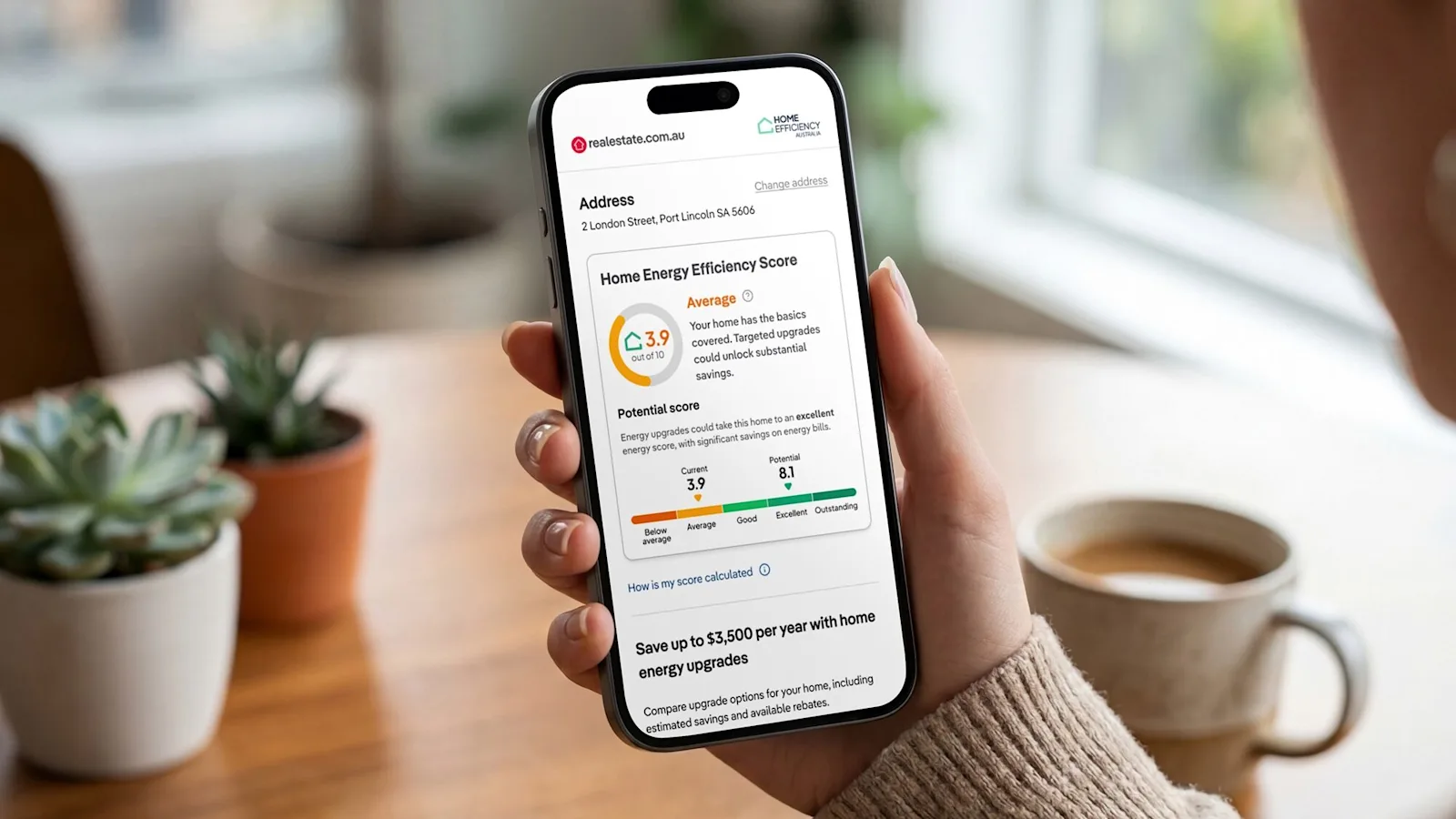
The Home Efficiency Australia HEAT tool generates a score from 0 to 10 based on your property's address and available data. It reflects how energy efficient your home is relative to what it could be.
0–3: Poor performing. High running costs. Significant upgrade potential.
3–5: Average. Typical of pre-2010 Australian homes. Some upgrades recommended.
5–7: Good. Performing above average. Minor improvements available.
7–10: Excellent to outstanding. High energy efficiency. Strong market position.
The Corvette Avenue home sat at 3.7. The Ferrari Drive home sat at 4.7.
That one-point gap translated to $35,000 at settlement.
Why Most Homeowners Don't Know Their Score
Energy efficiency hasn't been a required disclosure at point of sale in most Australian states — until now.
The ACT already mandates energy ratings at sale. NSW began trialling mandatory disclosure in late 2025. The federal government's Home Energy Ratings Disclosure Framework (Version 2, released December 2024) is setting the stage for national rollout.
This means the market is moving whether homeowners are ready or not.
Buyers are increasingly asking about energy performance. Lenders are beginning to factor it into valuations. And real estate agents in higher-performing markets are already using energy scores as a selling point.
The homeowners who know their score before they list will be better positioned than those who find out at settlement — or don't find out at all.
What Upgrades Actually Matter?
Not all upgrades are equal. The highest-impact, fastest-payback improvements for most Australian homes are:
1. Solar panels The single most visible energy upgrade to buyers. Average uplift of 2.7% on property values nationally (Cotality, 2025). A 6.6kW system — the most common residential size in Australia — costs $5,500–$8,000 before government rebates, or $3,500–$6,000 after. Payback period: 4–8 years. Net annual savings: $1,000–$1,500 depending on system size and usage.
2. Insulation Ceiling insulation reduces heating and cooling costs by up to 30%. Pays for itself within 3–5 years. One of the cheapest upgrades with the highest score impact for older homes.
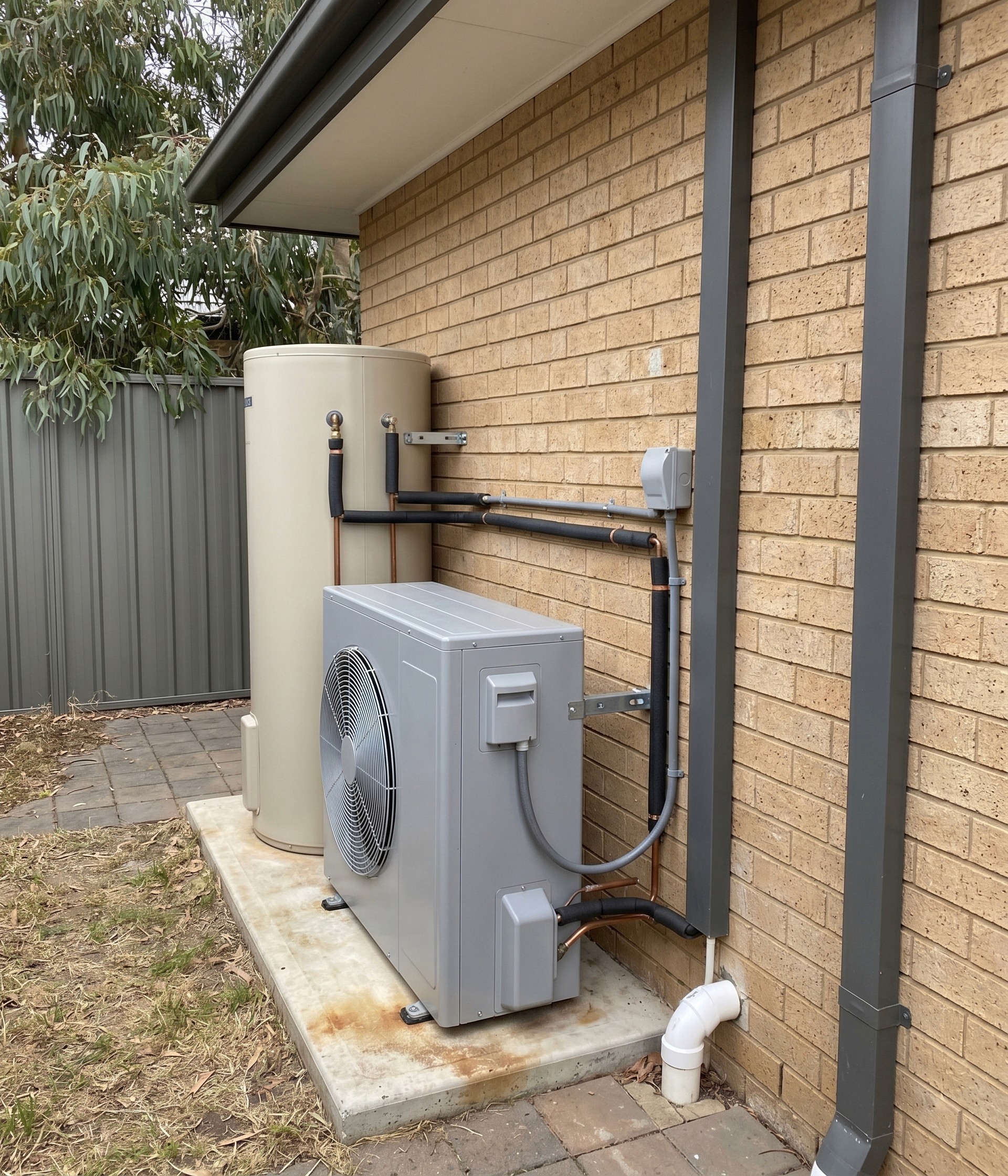
3. Heat pump hot water system Running costs approximately one-third of a conventional gas system. Payback period: 4–6 years. High score impact for homes still on gas hot water.
4. Ducted heating upgrade / reverse cycle Replacing gas ducted heating with reverse cycle significantly improves both comfort and energy score. One of the key upgrades at 62 Ferrari Drive.
5. Draught sealing and glazing Low-cost, high-impact. Australian homes lose 40–60% of heating and cooling through poor insulation, windows and gaps.
The "Same Street. Different Score." Campaign
This blog post is part of Home Efficiency Australia's Same Street. Different Score. campaign — a data-driven content series using real Australian property sales to show what energy performance does to home values.
Every piece of content in this campaign uses verified settled sale prices from PropTrack and energy scores generated by the HEA HEAT tool. No estimates. No projections. Just data.
The Cranbourne East comparison is the first in the series. New suburbs will follow.
Frequently Asked Questions
Does having solar panels automatically mean a higher sale price? Solar is the single most common energy feature cited in Australian property listings (37.6% of houses sold in 2025 had solar, per Cotality). It consistently correlates with higher sale prices, but the premium varies by market, system size, and buyer pool. Energy score improvement is the more reliable predictor of value impact.
How much do energy upgrades cost in Australia? Costs vary by upgrade type. A 6.6kW solar system typically costs $7,000–$11,000 before government rebates. Ceiling insulation ranges from $1,500–$3,500. Hot water heat pumps cost $4,000–$7,500 before rebates. Most upgrades attract federal or state government incentives that reduce upfront cost significantly.
Is energy disclosure mandatory in Australia? The ACT has mandatory energy disclosure at point of sale. NSW began trialling in late 2025. National rollout is underway under the federal Home Energy Ratings Disclosure Framework. Other states and territories are developing their own schemes.
What is the HEA HEAT tool? The Home Efficiency Australia HEAT tool is a free, address-based energy assessment that generates a score from 0 to 10 for any Australian residential property. It uses available property data to estimate current performance and recommended upgrades. Scores are generated at low accuracy without additional property detail — accuracy improves when homeowners verify their property information.
Does energy score affect home loan eligibility? Increasingly, yes. Lenders participating in the federal Household Energy Upgrades Fund offer discounted finance for energy improvements. Energy performance is becoming a factor in green lending and property valuation frameworks.
Find Out Where Your Home Sits
The Corvette Avenue homeowner didn't know their score was 3.7. They didn't know what it was costing them.
You can find out yours in 60 seconds — for free.
Run your free HEAT assessment → homeefficiencyaustralia.com.au
Enter your address. Get your score. See what upgrades would move it — and what that could mean for your home's value.
Sources
PropTrack via property.com.au — sale prices for 19 Corvette Ave and 62 Ferrari Dr, Cranbourne East VIC, verified April 2026
HEA HEAT tool — energy scores for both properties, generated April 2026 at low accuracy
Cotality (formerly CoreLogic) December 2024 Report: "Amped Up: How Energy Efficient Are Australian Homes?" — star rating data and resale value uplift
Cotality 2025 analysis — solar uplift data (⚠️ verify specific report before publishing)
Australian Government energy.gov.au — Household Energy Upgrades Fund, energy savings data
DCCEEW — Home Energy Ratings Disclosure Framework Version 2, December 2024
NatHERS — National Construction Code 2022 energy standards
Home Efficiency Australia is a consumer-facing brand of VALAI, a climate fintech and proptech platform. HEA provides free home energy assessments via the HEAT tool at homeefficiencyaustralia.com.au. This article is for informational purposes only and does not constitute financial advice. Multiple factors affect property value.
Tags: home energy efficiency, property value Australia, solar panels home value, energy score, HEAT tool, Cranbourne East, home upgrades ROI, energy efficiency Australia, same street different score, home efficiency Australia
Tips and Tricks
Explore more guides to scale your business

Subscribe to our newsletter
Stay up to date on rebates, offers, and energy-saving tips By subscribing you agree to our Privacy Policy.